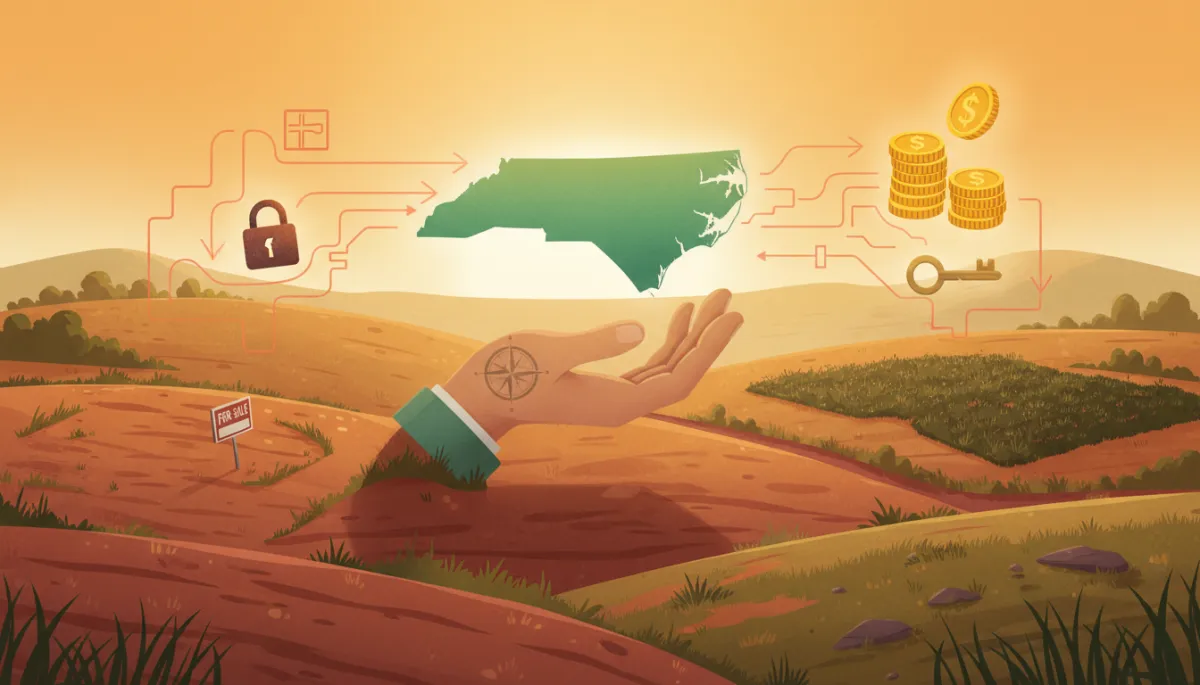
Sell NC Land with Unpaid Property Taxes
North Carolina Land, Property Taxes, Selling Land with Back Taxes
What Happens to Land With Unpaid Property Taxes in North Carolina (And How to Sell It)
If you’ve fallen behind on property taxes for a vacant lot or piece of acreage in North Carolina, you’re not alone. Many landowners find themselves in this situation and quietly worry about liens, foreclosure, or whether the land is even worth anything anymore. This guide walks you through what actually happens, what your options are, and how you may be able to sell the property even if taxes are past due.
What Really Happens When Property Taxes Go Unpaid in North Carolina
Property taxes help pay for local services like schools, roads, and emergency responders. When taxes on your land go unpaid, the county doesn’t usually move to take the property right away. Instead, there is a process that unfolds over time, and understanding it can take some of the fear out of the situation.
Interest and Penalties Start to Add Up
In North Carolina, when you miss the payment deadline, the county adds interest and possibly penalties onto the unpaid balance. The longer the bill sits, the more it grows. This can feel overwhelming, especially if the land isn’t producing income or if you no longer use it, but it does not instantly mean you lose the property.
The County’s Tax Lien on Your Property
Under North Carolina law, unpaid property taxes become a lien against the property. In plain language, that means the county has a legal claim to be paid from the property before you or other creditors. This lien is tied to the land itself, not to you personally, which is why it follows the property even if it’s sold, unless it’s paid off at or before closing (N.C. Gen. Stat. Chapter 105, Article 26).
How Tax Foreclosure Generally Works in North Carolina
If taxes remain unpaid for a long period, the county tax office can start a tax foreclosure. This is usually a court-based process where the county asks a judge for permission to sell the property to recover the unpaid taxes, interest, and costs. Before that happens, you receive notices and warnings, and the property may be advertised for a foreclosure sale or auction, with an opportunity to catch up on what’s owed before the sale is finalized (North Carolina Judicial Branch).
Every county handles timelines a bit differently, and recent law changes around reappraisals and tax procedures add more moving parts. Counties must also follow “truth-in-taxation” rules when they raise certain rates, which can affect tax bills but not the basic rule that unpaid taxes can eventually lead to foreclosure. If you’re worried you might be getting close to that point, it’s better to look at options now rather than waiting.
💡 Pro Tip: If you’re unsure how far behind you are, you can usually call your county tax office and ask for the current payoff amount, including interest and fees. There’s nothing embarrassing about asking; they answer these questions every day.
Why Many Owners Think Land with Back Taxes Can’t Be Sold
It’s very common to assume that once taxes are past due, the land is “stuck” and nobody would want it. You might feel like you have to pay everything off before you could even think about selling. That belief keeps a lot of people frozen, even when they’d really like to move on from the property.
In reality, unpaid property taxes are a problem that can usually be handled at closing. Because the tax lien is attached to the land, not to you personally, buyers and title companies are used to paying those liens out of the sale proceeds. It may reduce how much cash you walk away with, but it rarely makes a sale impossible on its own.
Your Realistic Options When You’re Behind on Property Taxes
Option 1: Catch Up on Taxes and List the Property Traditionally
One option is to pay off the taxes, then list the land with a real estate agent or sell it yourself. This can make sense if you have the funds available and the property is in a desirable area where you expect strong interest. A traditional listing may bring a higher price, but it also comes with listing commissions, marketing time, and some uncertainty about how long it will take to find a buyer.
Option 2: Sell Directly and Have Taxes Paid at Closing
Another option is to sell directly to a cash buyer who is comfortable with properties that have back taxes. In many cases, you do not have to come up with the tax money upfront. Instead, the title company or closing attorney uses part of the buyer’s funds to pay the county at closing. The remaining amount, after closing costs and any other liens, is what you receive as your cash proceeds.
This approach can be especially helpful if the taxes have piled up to a point where catching up out of pocket feels out of reach. It lets you turn a stressful situation into a clean exit, even if the land has become more of a burden than a benefit for you.
Option 3: Do Nothing and Risk Tax Foreclosure
The last option is to do nothing and hope the problem goes away. Unfortunately, unpaid taxes usually do the opposite: they grow with interest, and the county can move forward with foreclosure if the bill remains unpaid long enough. If the property is sold at a tax foreclosure sale, you may lose the land and, depending on the circumstances, walk away with little or nothing after costs are paid.
A quick call or visit to the county tax office can clarify exactly what you owe today.
How Selling to a Cash Buyer Can Work When Back Taxes Are Owed
Selling directly to a cash buyer like Red Clay Acquisitions LLC is different from listing with an agent. We buy vacant land across all 100 North Carolina counties, including properties with unpaid taxes, liens, or long-neglected acreage. Our goal is to make the process simple and respectful, especially when you’re already feeling pressure from the tax situation.
In a typical direct sale with back taxes, the county is paid out of the sale proceeds at closing. You don’t need to write a separate check to the tax office before anything can move forward. The title company or real estate attorney handling the closing will receive an official payoff from the county, then pay that amount directly when the sale closes. You receive whatever is left after those obligations are taken care of.
Note: We are not attorneys, tax advisors, or a licensed real estate brokerage. The information here is general and educational. For specific legal or tax questions, it’s always a good idea to speak with your own attorney, accountant, or county tax office.
What the Direct-Sale Process Looks Like Step by Step
Step 1: You Share Basic Property Information
Everything starts with a short form where you tell us about your property. This usually includes the county, parcel number (if you have it), approximate acreage, and anything you’d like us to know about the land or your situation. You don’t need to have every detail perfect; we can often look up missing pieces through county records.
Step 2: We Research the Property and Prepare a Fair Cash Offer
Next, we review your land on an individual basis. We look at location, access, nearby sales, topography, and any visible issues. We also factor in the unpaid taxes and other costs we’ll need to cover. Based on that, we prepare a straightforward cash offer. There’s no obligation to accept it, and there’s no pressure from our side. It’s simply information you can use to decide what feels right for you.
Step 3: If You Accept, We Coordinate Closing on Your Schedule
If you decide to move forward, we work with a North Carolina title company or real estate attorney to handle the closing. They confirm the exact amount of taxes and any other liens that need to be paid. You choose the closing date that works for you, and on that date the buyer’s funds are used to pay the county and other required parties first. You receive your portion by check or wire, and the property transfers out of your name.
There are no commissions, no listing fees, and no repairs needed. Because we purchase land directly, you skip showings, open houses, and months of uncertainty. Our role is to give you a clear path out from under the property, especially when taxes have turned it into a source of stress instead of value.
Frequently Asked Questions About Selling Land with Unpaid Taxes
Will I owe money if the taxes are more than the land is worth?
If the total of unpaid taxes, interest, and other liens is higher than what the property can reasonably sell for, there may not be any cash left over for you at closing. In some situations, there might not be a workable sale at all. When we review a property, we look carefully at these numbers and are upfront about whether a sale would leave you with proceeds or simply clear the taxes. You can then decide whether moving forward makes sense for you.
How far behind is “too far behind” on taxes to sell?
There isn’t a single cutoff point that applies to every property. We routinely look at land where taxes have been unpaid for several years. What matters most is the relationship between what’s owed and what the land is worth in today’s market. Even if you feel like you’re “too far gone,” it can be worth getting a clear picture of your options before assuming there’s nothing you can do.
Do I need to talk to the county first?
You don’t have to speak with the county before reaching out to a buyer, but it can be helpful. The tax office can tell you exactly how much is owed and whether any foreclosure steps have already started. If you’d rather not make that call right away, we can often help you understand the general situation from public records and then you can decide if you want to confirm details directly with the county.
What if there’s already a tax lien or foreclosure case filed?
A tax lien is normal when taxes are unpaid; it doesn’t automatically stop a sale. If a formal foreclosure case has already started, timing becomes more important. In some situations, a sale can still go through if the taxes and costs are paid off in time. In others, the process may be too far along. Because every case is different, this is a good moment to speak with a local attorney or your county tax office to understand where things stand and what options remain.
A Low-Pressure Way to Explore Your Options
Living with unpaid property taxes hanging over your head can be exhausting. You might feel guilty, frustrated, or simply worn out from thinking about it. It’s important to remember that falling behind on taxes does not make you a bad property owner or a bad person. Life happens, and land that once seemed like a good idea can turn into a burden over time.
If you’d like to see whether selling the land could help you step away from the situation, Red Clay Acquisitions LLC can review your property and provide a free, no-obligation cash offer. We’ll look at the land, the back taxes, and the overall picture, then share what we can realistically do. From there, you decide whether keeping the property, listing it, or selling directly feels best for you.
There’s no requirement to move forward, and any offer we make is non-binding until a purchase agreement is signed. If nothing else, you’ll have more information and one more option on the table. When you’re ready, you can reach out to Red Clay Acquisitions LLC, share a few details about your North Carolina land, and take the next step toward resolving a problem that has been weighing on you for far too long.